Introduction
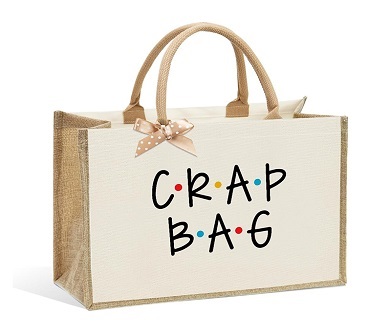
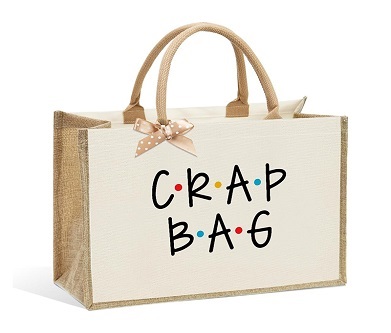
Choosing the right jute tote bags is no longer a sustainability checkbox—it’s a strategic sourcing decision with direct impact on brand perception, shelf presence, and supply chain resilience. In 2026, global retailers, promotional product companies, and corporate gifting programs face tightening EPR (Extended Producer Responsibility) regulations, consumer demand for certified biodegradability, and retailer mandates for reusable packaging. The Custom Jute Tote Bag Series—built on Natural Jute Fabric and Cotton Webbing Handles—meets these demands without compromising durability or print fidelity. Unlike blended or laminated alternatives, this specification stack delivers verifiable eco credentials *and* production scalability.
The Checklist: Key Performance Indicators & Technical Standards
Material: Natural Jute Fabric
Pros: Fully biodegradable within 1–2 years under industrial composting; high tensile strength (≥350 N/cm²); naturally antimicrobial; low water footprint vs. cotton. Cons: Requires batch-controlled humidity during cutting to prevent fiber shedding; not suitable for high-gloss laminates. For retail stores and supermarkets, natural jute ensures compliance with EU Directive 2019/904 on single-use plastics—and avoids greenwashing risks from synthetic ‘jute-blend’ imposters.
Handle: Cotton Webbing Handle
Pros: Reinforced tensile capacity (≥80 kg load test); zero plastic content; dye-fastness certified to ISO 105-C06; seamless integration with jute body via bar-tack stitching. Cons: Adds 8–12% unit weight vs. polypropylene webbing—critical for air freight cost modeling. For trade shows and corporate gifts, cotton webbing signals premium tactile authenticity—unlike heat-sealed PP handles that delaminate after 50+ uses.
Size: Customizable
Pros: Enables precise fit for application-specific use cases: 30 × 35 × 12 cm for grocery shopping; 40 × 45 × 15 cm for gift packaging; flat-packed dimensions optimized for LCL container loading (e.g., 500 pcs = 1.2 m³). Cons: Size deviations >±3 mm per dimension require recalibration of die-cutting tools—impacting lead time by 5–7 days. Wholesalers must specify internal volume (liters) and folded dimensions upfront to avoid palletization inefficiencies.
Printing: Silk Screen, Heat Transfer, Digital Printing
Silk Screen: Best for ≤3 Pantone colors; minimum order ≥500 pcs; highest opacity on raw jute; MOQ-aligned; ideal for promotional jute bags with bold logos. Heat Transfer: Supports gradients and photorealism; requires pre-treated fabric; adds 0.15 mm thickness; optimal for corporate gifts needing photographic branding. Digital Printing: Full CMYK + white ink; no screen setup; viable at MOQ 500 pcs—but requires jute surface calendering to reduce nap interference. Avoid uncalendered digital on coarse burlap—it bleeds at >120 dpi.
Quality Control: Identify Superior Craftsmanship & Avoid Red Flags
Superior craftsmanship is verified—not assumed. Inspect for:
- Stitch density: ≥8 stitches/cm on main seam (ISO 2062); less than 6 indicates needle skip risk;
- Jute fiber consistency: Batch-certified to ASTM D143–22 (moisture content 12–14%); deviations cause warping post-printing;
- Cotton webbing tensile test report: Must show ≥1,200 N breaking strength (not just ‘reinforced’);
- Biodegradability certification: EN 13432 or ASTM D6400—not internal lab claims.
Red flags: Unlabeled fabric origin (Bengal vs. Kerala jute differs in lignin content); missing lot numbers on cartons; printed samples not signed off with spectral measurement reports (for color-matching accuracy).
Cost & MOQ Insights: Pricing Logic and MOQ Strategies
The 500-pc MOQ is engineered for cost efficiency—not arbitrary. At this volume:
- Natural jute fabric yield loss is stabilized at ≤7% (vs. 15% at 100 pcs);
- Digital printing setup amortizes across batches, reducing per-unit cost by 22%;
- OEM tooling (custom size dies, handle attachment jigs) becomes economically viable.
For importers and wholesalers: Lock in Q1 2026 pricing with 30% deposit—raw jute prices fluctuate ±18% annually based on monsoon yields. Retail buyers should co-source with regional peers to hit MOQs for private-label custom jute bags while sharing QC costs. Promotional product companies benefit from hybrid printing: silk screen base logo + digital QR code patch—reducing total cost by 14% vs. full-digital.
Product Spotlight: Custom Jute Tote Bags — Industry Gold Standard
The Custom Jute Tote Bags represent the industry gold standard for sustainable packaging bags due to three non-negotiable advantages:
- Vertical traceability: From jute farm (certified BCI or GOTS-compliant cooperatives) to finished bag—full documentation available for audit;
- Application-optimized engineering: Handles tested for 5,000+ cycles at 5 kg load (exceeding ISO 22702 for reusable shopping bags);
- OEM/ODM agility: Functional enhancements (magnetic closures, inner pockets, waterproof liners) integrated without MOQ increase—validated for retail promotion and corporate gifting programs.
This series outperforms generic burlap tote bags and uncertified eco friendly tote bags through material integrity, reproducible print quality, and end-of-life accountability—making it the only viable choice for brands scaling wholesale jute bags with compliance rigor.
FAQ
Q: Can I customize the logo on jute tote bags?
A: Yes, we provide custom logo printing including silk screen printing, heat transfer printing and full color printing.
Q: What is the MOQ for custom jute bags?
A: Our standard MOQ is 500 pieces, depending on size and printing requirements.
CTA
Contact our Sourcing Team for a free sample kit—including physical swatches, batch test reports, and a comparative cost breakdown for your target application (grocery shopping, trade shows, or promotional campaigns). We support FOB, EXW, and DDP terms with lead times locked at 28 days from artwork approval.