
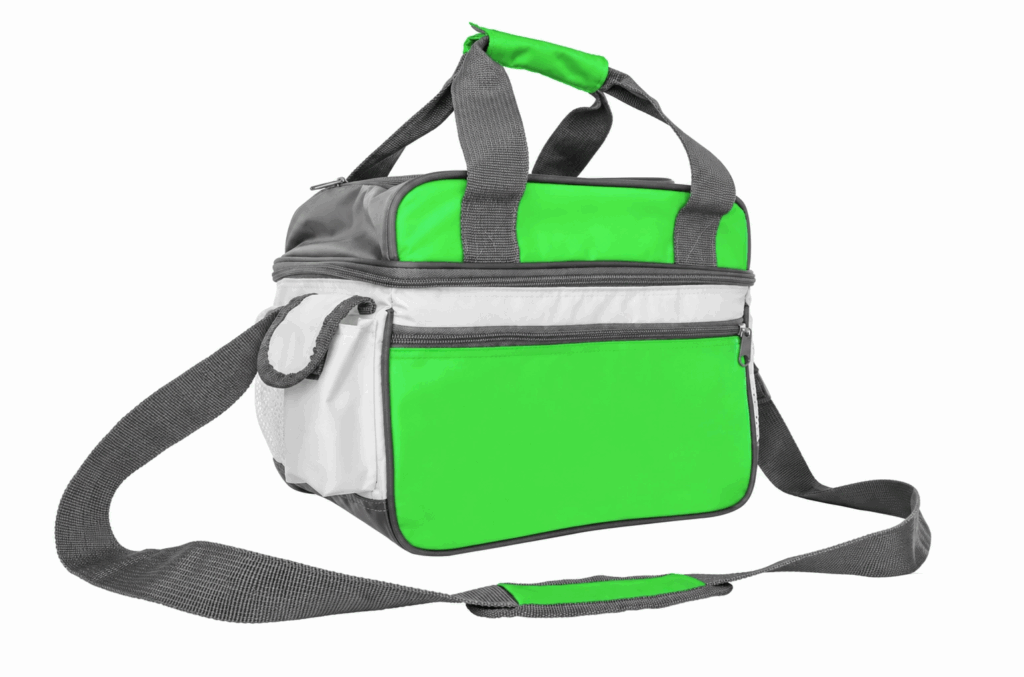
From the courier delivering your weekend pizza to the medical logistics team transporting life-saving vaccines, thermal bags have quietly become the backbone of temperature-controlled commerce. They keep ice cream frozen on a 35°C summer afternoon, preserve the crispness of fried chicken across a 45-minute delivery, and protect biological samples during cross-city transport. But how exactly do these unassuming bags perform such reliable thermal magic?
The answer lies not in a single material, but in a sophisticated multi-layer system engineered to combat heat transfer from every angle. Modern thermal bags combine reflective films, insulating foams, and protective fabrics — each chosen for specific scientific reasons. In this guide, we’ll break down the thermal bag insulation materials driving today’s industry, from the reflective inner linings to the rugged outer shells, and explain why the right combination makes all the difference.
The Science of Thermal Management: How Heat Actually Moves
To understand how thermal bags work, we first need to understand the three mechanisms of heat transfer that engineers must defeat:
- Conduction — Heat moving directly through a solid material (e.g., warmth escaping through the bag wall via molecular vibration).
- Convection — Heat carried away by moving air or liquid (e.g., warm air leaking out when you open the zipper).
- Radiation — Heat traveling as infrared electromagnetic waves (e.g., the sun warming a cold delivery bag from outside).
A well-designed thermal bag functions as a composite thermal barrier, with each layer engineered to attack one or more of these mechanisms. The reflective lining tackles radiation. The foam core neutralises conduction. The sealed seams and tight zippers minimise convection. Together, they slow the inevitable — but slow it dramatically.
Critical to this performance is a property called thermal conductivity (measured in W/m·K). The lower the value, the better the insulator. Air has a thermal conductivity of roughly 0.024 W/m·K — which is why the best insulated bag construction traps as much still air as possible inside closed-cell foams. Equally important is avoiding thermal bridges — points like seams, stitches, or compressed foam that allow heat to bypass the insulation.
Deep Dive: Primary Materials by Layer
A premium thermal bag is built like a thermos in fabric form — a structured stack of three functional layers, each addressing a different physics problem.
1. The Reflective Inner Lining (Radiation Barrier)
The innermost layer is the bag’s first line of defence against radiant heat. Its primary job is to reflect infrared radiation back toward the contents (keeping hot food hot) or away from them (keeping cold items cold). It also serves as the food-contact surface, so safety and cleanability are non-negotiable.
Aluminum Foil
True aluminum foil remains the gold standard for radiant heat reflection. With a reflectivity rate of approximately 95–97% for infrared radiation, a thin foil layer (typically 7–12 microns) bonded to a substrate dramatically reduces both heat loss and heat gain. It’s lightweight, naturally antimicrobial, food-safe when properly graded, and surprisingly cost-effective at scale. The trade-off: pure foil is prone to creasing and micro-tearing over hundreds of folding cycles, which gradually reduces reflectivity.
PEVA (Polyethylene Vinyl Acetate)
PEVA has emerged as the modern, non-toxic alternative to PVC linings. It’s chlorine-free, BPA-free, and phthalate-free, making it one of the safest plastics in direct food contact. While PEVA itself doesn’t reflect radiant heat as effectively as foil, the PEVA lining benefits are compelling: it’s 100% waterproof, leak-proof, soft, flexible, and easy to wipe clean. For grocery delivery, lunch totes, and any application where spills and food safety are top concerns, PEVA outperforms foil on practicality. Many manufacturers now combine the two — using foil for thermal performance and PEVA as a food-safe inner contact layer.
Aluminum Film (Mylar / Metallised Polyester)
Mylar, or metallised PET film, offers a clever middle ground. By vaporising aluminum onto a polyester film base, manufacturers create a lining that retains roughly 85–90% reflectivity while gaining significantly more flexibility, tear resistance, and longevity than pure foil. It resists creasing, holds up under repeated folding, and laminates easily to foam cores. For commercial delivery bags subjected to heavy daily use, Mylar often outlasts traditional foil by 2–3x.
2. The Core Insulation Layer (Conduction Barrier)
If the lining handles radiation, the foam core handles conduction. This is where the bag’s thickness, density, and cell structure determine how slowly heat creeps through the wall. The principle is simple: trap air in millions of tiny, sealed pockets, because still air is one of the best insulators known.
EPE Foam (Expanded Polyethylene) — The Industry Standard
Often marketed as “pearl cotton,” EPE foam is the workhorse of the thermal bag industry. It’s a closed-cell foam, meaning each tiny air pocket is sealed off from its neighbours, virtually eliminating convective heat transfer within the foam itself. EPE offers an excellent balance of:
- Low thermal conductivity (~0.035 W/m·K)
- Lightweight construction
- Moisture resistance (won’t absorb water)
- Affordability for bulk production
- Easy lamination to foil and PEVA layers
EPE typically comes in 5mm, 8mm, 10mm, and 15mm thicknesses. Most commercial food delivery bags use 8–10mm EPE, while cold chain and long-haul applications step up to 15mm or layered constructions.
PU Foam (Polyurethane)
Polyurethane foam offers superior thermal performance (~0.022–0.028 W/m·K), making it the material of choice for premium and medical-grade applications. It’s denser, more rigid, and provides better long-term insulation stability. Rigid PU foam is what you’ll find inside vaccine transport boxes and pharmaceutical-grade thermal containers. The downsides: higher cost, less flexibility, and more complex manufacturing compared to EPE.
NBR Foam (Nitrile Butadiene Rubber)
NBR is a synthetic rubber foam known for flexibility, durability, and excellent thermal stability across a wide temperature range. It’s also more resistant to oils and chemicals than EPE or PU. NBR is common in high-end picnic coolers, marine cooler bags, and applications where the bag will be flexed, compressed, and recovered repeatedly. The EPE foam vs PU foam debate often expands to include NBR when buyers prioritise long service life and structural recovery.
3. The Protective Outer Shell
The outer shell rarely contributes meaningfully to insulation, but it determines the bag’s lifespan, weather resistance, and brand presentation.
Oxford Cloth (600D / 900D / 1680D Polyester)
Oxford cloth — measured in denier (D) — is the dominant outer material for commercial thermal bags. The denier rating describes the thickness of the woven yarn:
- 600D Oxford — Standard delivery bags, good balance of weight and durability
- 900D Oxford — Heavy-duty commercial use, professional courier bags
- 1680D Oxford — Maximum abrasion resistance, premium catering carriers
Oxford cloth is typically PU-coated for water resistance and accepts screen printing, embroidery, and heat transfer for branding.
Non-woven Polypropylene
Non-woven fabric is the material of choice for promotional and disposable thermal bags — think supermarket cooler totes and event giveaways. It’s inexpensive, lightweight, and easy to print on, but offers minimal abrasion resistance and a short service life (typically 20–50 uses).
Nylon and Recycled Polyester (rPET)
For premium consumer-facing brands, ripstop nylon and recycled PET shells are increasingly common. rPET offers durability comparable to virgin polyester while supporting sustainability commitments — a key trend we’ll address shortly.
Comparative Analysis: Thermal Bag Material Performance
The following table summarises how the primary thermal bag insulation materials compare across the metrics that matter most to buyers:
| Material | Primary Function | Insulation Power | Durability | Eco-friendliness |
|---|---|---|---|---|
| Aluminum Foil | Radiant heat reflection | ⭐⭐⭐⭐⭐ (95%+ reflective) | ⭐⭐ (creases over time) | ⭐⭐⭐⭐ (recyclable metal) |
| PEVA Lining | Food-safe waterproof barrier | ⭐⭐ (no reflection) | ⭐⭐⭐ (flexible, puncture-prone) | ⭐⭐⭐⭐ (chlorine-free) |
| Mylar Film | Flexible reflective lining | ⭐⭐⭐⭐ (85–90% reflective) | ⭐⭐⭐⭐ (tear-resistant) | ⭐⭐⭐ (composite material) |
| EPE Foam | Closed-cell core insulation | ⭐⭐⭐⭐ (~0.035 W/m·K) | ⭐⭐⭐⭐ (lightweight, durable) | ⭐⭐⭐ (recyclable PE) |
| PU Foam | Premium core insulation | ⭐⭐⭐⭐⭐ (~0.022 W/m·K) | ⭐⭐⭐⭐ (rigid, stable) | ⭐⭐ (limited recyclability) |
| NBR Foam | Flexible high-end core | ⭐⭐⭐⭐ (excellent) | ⭐⭐⭐⭐⭐ (long service life) | ⭐⭐ (synthetic rubber) |
| 600D Oxford | Protective outer shell | ⭐ (negligible) | ⭐⭐⭐⭐ (abrasion-resistant) | ⭐⭐⭐ (rPET available) |
| Non-woven PP | Lightweight outer shell | ⭐ (negligible) | ⭐⭐ (short lifespan) | ⭐⭐ (often single-use) |
For deeper technical specifications, consult [link to Material Safety Data Sheets / MSDS resources] or independent [link to Thermal Performance Studies] for verified ASTM and ISTA test results.
Sustainability Trends Shaping Thermal Bag Materials in 2026
The thermal bag industry is undergoing a quiet but significant materials revolution, driven by corporate ESG mandates, EU packaging directives, and consumer demand for greener food delivery bag technology. Several trends now define the cutting edge:
- Recycled PET (rPET) shells — Major delivery brands are transitioning their outer fabrics to rPET woven from post-consumer plastic bottles, cutting virgin plastic use without sacrificing durability.
- Bio-based PEVA alternatives — Researchers are developing plant-derived linings using sugarcane-based polyethylene, maintaining waterproofing while reducing fossil fuel dependency.
- Recyclable mono-material designs — A new generation of thermal bags uses a single polymer family (all-PE construction) so the entire bag can be mechanically recycled at end of life.
- Biodegradable insulation cores — Mycelium-based foams and starch-blended PE foams are entering pilot production, particularly for short-life applications like meal kit delivery.
- Closed-loop take-back programs — Logistics operators are partnering with manufacturers to refurbish, re-line, or recycle bags after their commercial life.
Buyers in 2026 increasingly request material certifications such as GRS (Global Recycled Standard), OEKO-TEX, and FDA/LFGB compliance — a sign that sustainability and food safety are now treated as inseparable purchasing criteria.
Choosing the Right Material Combination for Your Application
Understanding the materials is one thing; choosing the right combination is another. Here are the proven configurations for common use cases:
- Pizza & hot food delivery: Aluminum foil lining + 8–10mm EPE foam + 600D Oxford shell.
- Grocery & produce delivery: PEVA lining + 5–8mm EPE foam + recycled polyester shell.
- Catering & buffet logistics: Foil-PEVA hybrid lining + 10mm EPE + 900D Oxford shell with reinforced base.
- Medical & pharmaceutical cold chain: Foil lining + 15mm+ PU foam + waterproof nylon shell + phase-change material packs.
- Outdoor & recreational coolers: Mylar lining + NBR foam + ripstop nylon shell.
Conclusion
Modern thermal bags are far more than fabric containers with foam padding. They are engineered composite systems, combining radiation reflectors, conduction-blocking foams, and weather-resistant shells into a unified thermal barrier. Each material — from aluminum foil and PEVA to EPE and PU foams — plays a specific role grounded in materials science.
For B2B buyers, the lesson is clear: don’t evaluate bags by appearance alone. Ask suppliers about lining type, foam density, shell denier, and certifications. For eco-conscious brands, the rise of rPET, bio-based polymers, and recyclable mono-materials offers genuine pathways to greener logistics without compromising performance. And for everyone — from solo couriers to global cold chain operators — understanding the science behind thermal bag insulation materials is the first step toward smarter, longer-lasting, and more reliable temperature-controlled transport.
Frequently Asked Questions (FAQ)
How long do thermal bags stay cold?
The answer depends on construction and ice pack usage. A standard PEVA-lined bag with 8mm EPE foam will keep contents below 8°C for roughly 3–4 hours with one frozen gel pack. A premium foil-lined bag with 15mm PU foam and dual ice packs can extend that to 12–24 hours, especially when paired with phase-change materials. Ambient temperature, the number of bag openings, and starting product temperature all significantly affect retention time.
Is PEVA safe for direct food contact?
Yes. PEVA is widely recognised as a safe, non-toxic alternative to PVC. It contains no chlorine, BPA, or phthalates and is approved for food contact under FDA and EU 10/2011 frameworks when produced to food-grade specifications. Always request compliance documentation when purchasing for commercial food applications.
Can you machine wash insulated bags?
Generally, no — most thermal bags should not be machine-washed. The agitation and heat can delaminate the foil lining, compress the foam core, and break down adhesive bonds between layers. Instead, wipe the interior with mild soap and warm water, allow it to air dry completely, and spot-clean the exterior. A few premium catering bags are designed with removable, washable liners — check the manufacturer’s care instructions.
What is the best insulation for professional food delivery?
For most commercial food delivery operations, the optimal combination is an aluminum foil or Mylar lining paired with 8–10mm closed-cell EPE foam and a 600D–900D Oxford cloth shell. This setup balances thermal performance, durability, weight, and cost. For longer routes (>1 hour) or premium services, upgrade to 15mm EPE or PU foam and add reinforced seam construction to eliminate thermal bridges.
What’s the difference between EPE foam and PU foam?
EPE foam is lightweight, flexible, moisture-resistant, and cost-effective — ideal for everyday delivery bags. PU foam offers lower thermal conductivity and better long-term stability but is denser, more rigid, and more expensive. EPE wins on flexibility and price; PU wins on raw insulation performance and is the standard for medical-grade thermal containers.
Are recycled materials as effective as virgin materials in thermal bags?
Yes — modern rPET fabrics and recycled foam cores deliver thermal and durability performance comparable to virgin equivalents when sourced from certified suppliers. The key is quality control: look for GRS-certified rPET and verified recycled-content percentages. Performance differences are typically negligible, while sustainability benefits are substantial.